Cedar vs Pressure Treated Fence: Which Wood Is Best?
Cedar and pressure-treated pine are the two most popular fence lumber choices in North America. They are similar in many ways — both make solid privacy fences, both require some maintenance, and both last 15-20 years when properly cared for. But the differences in cost, appearance, chemical treatment, and long-term maintenance make the choice matter more than most people realize. Here is an honest, detailed comparison to help you decide.
Side-by-Side Comparison Table
| Factor | Western Red Cedar | Pressure-Treated Pine |
|---|---|---|
| Cost per 6ft picket | $3.50 – $6.00 | $2.00 – $3.50 |
| Lifespan | 15 – 25 years | 15 – 20 years (with maintenance) |
| Rot resistance | Natural (thujaplicins in heartwood) | Chemical (ACQ or CA-B preservatives) |
| Insect resistance | Good (natural oils repel most insects) | Excellent (copper-based treatment) |
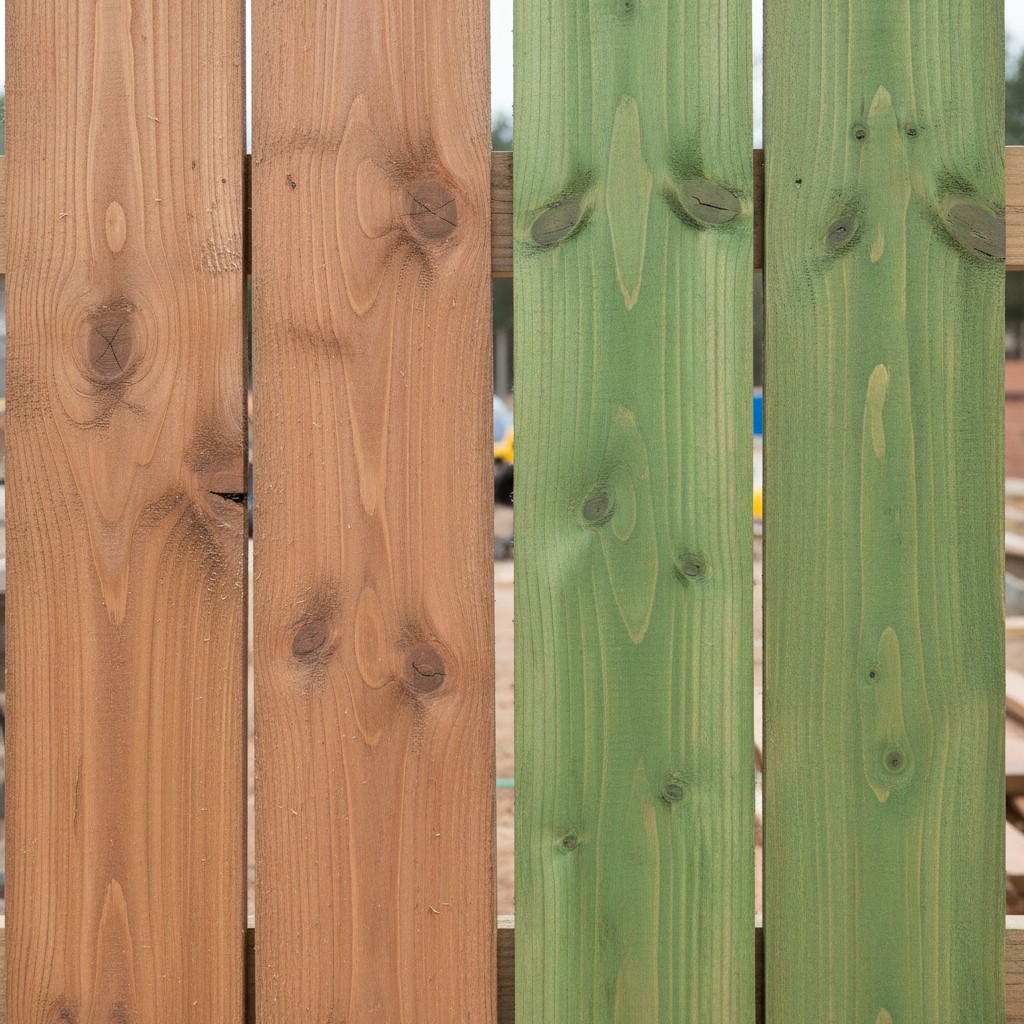
| Initial appearance | Warm reddish-brown, tight grain | Green or tan tint, open grain |
| Weathered appearance | Even silver-gray | Uneven gray, potential black mildew |
| Maintenance schedule | Seal every 3-5 years (optional) | Stain/seal every 2-3 years (recommended) |
| Weight (6ft picket) | ~4 lbs (lighter, easier to handle) | ~7 lbs (heavier when fresh) |
| Shrinkage/warping | Minimal — dimensionally stable | Moderate — must dry before staining |
| Availability | Regional — best pricing in Pacific NW | Nationwide — stocked at all home centers |
Cedar Pros & Cons
Western red cedar has been a premium fence material for generations, and for good reason. The heartwood contains natural oils called thujaplicins that resist decay, fungal growth, and insect damage without any chemical treatment. This makes cedar one of the few fence materials that is both beautiful and naturally durable.
Pros:
- Natural beauty: Rich reddish-brown color with tight, straight grain. Cedar is the fence material most people picture when they imagine a "nice wood fence."
- No chemical treatment: Safe to handle without gloves. No concerns about soil contamination around gardens or play areas.
- Dimensionally stable: Cedar shrinks and warps less than pine, meaning fewer gaps between pickets over time and less board cupping.
- Lightweight: At roughly 4 pounds per 6-foot picket, cedar is significantly easier to handle during installation — a real advantage for DIY builders.
- Graceful aging: Left untreated, cedar weathers to an even silver-gray that many homeowners find attractive. If you prefer the natural aged look, cedar requires zero maintenance.
Cons:
- Higher upfront cost: Expect to pay 50-80% more per board than pressure-treated pine.
- Regional availability: Cedar is grown primarily in the Pacific Northwest and western Canada. If you live in the Southeast or Midwest, shipping costs can push prices even higher.
- Sapwood is not rot-resistant: Only the heartwood (the darker inner portion) resists decay. Lower-grade cedar with more sapwood will not last as long and needs sealing.
- Softer wood: Cedar dents and scratches more easily than dense PT pine. This rarely matters for fencing but is worth noting.
Pressure-Treated Pros & Cons
Pressure-treated southern yellow pine is the workhorse of American fencing. The lumber is infused with copper-based preservatives (ACQ or CA-B) under high pressure, forcing the chemicals deep into the wood fibers. This process turns inexpensive, fast-growing pine into a rot-resistant material at a fraction of cedar's cost.
Pros:
- Affordable: The single biggest advantage. A 150-linear-foot fence in PT can cost $800-$1,500 less in materials than cedar.
- Available everywhere: Every Home Depot, Lowe's, and local lumberyard stocks PT fence boards and posts in standard sizes.
- Strong and dense: Southern yellow pine is one of the strongest softwoods. PT posts and rails hold fasteners well and resist impact.
- Excellent ground contact rating: PT lumber rated for ground contact (UC4A or UC4B) is specifically designed for fence posts set in soil or concrete.
- Accepts stain well: Once dried (4-8 weeks after purchase), PT wood takes stain beautifully and can be tinted to match virtually any color preference.
Cons:
- Requires staining: Unlike cedar, PT wood looks poor when left to weather naturally — uneven graying, black mildew spots, and surface checking are common within the first year.
- Shrinks and warps: PT lumber is sold wet (often dripping). As it dries, boards can twist, cup, and leave gaps. Building with wet PT lumber and coming back to stain after it dries helps, but warping is still common.
- Chemical treatment concerns: While modern ACQ and CA-B are much safer than the old CCA (arsenic-based) treatment, the copper preservatives are corrosive to standard steel fasteners. You must use stainless steel or hot-dipped galvanized fasteners, or they will corrode within a few years.
- Heavier to work with: A wet 6-foot PT picket weighs roughly 7 pounds — nearly double the weight of a cedar board. Over 200+ pickets, the difference is physically significant.
10-Year Total Cost Comparison
The upfront price difference between cedar and PT is real, but it does not tell the whole story. Maintenance costs over time close the gap significantly. Here is a realistic 10-year comparison for a standard 150-linear-foot, 6-foot-tall privacy fence:
| Cost Category | Cedar | Pressure-Treated |
|---|---|---|
| Materials (boards, posts, rails, concrete, hardware) | $3,200 – $4,500 | $2,000 – $3,000 |
| Initial stain/sealer (optional for cedar) | $0 – $250 | $200 – $350 |
| Restaining (10 years) | $250 – $500 (1-2 applications) | $600 – $1,200 (3-4 applications) |
| Board replacements (warped/cracked) | $50 – $100 | $100 – $250 |
| 10-Year Total | $3,500 – $5,350 | $2,900 – $4,800 |
As you can see, the 10-year total cost gap narrows considerably. Cedar still costs slightly more, but the difference is often only $500-$1,000 over a decade — far less than the initial price gap suggests. Use our fence calculator to get a material cost estimate specific to your project dimensions.
Environmental Considerations
If environmental impact matters to you, there are meaningful differences between these two materials:
- Cedar is a renewable resource harvested from managed forests in the Pacific Northwest and British Columbia. Western red cedar grows slowly (50-80 years to harvest size), but responsible forestry practices ensure replanting. Look for FSC-certified cedar for the best environmental credentials.
- PT pine uses fast-growing southern yellow pine that reaches harvest size in 20-25 years — a faster renewable cycle than cedar. However, the pressure treatment process uses copper-based chemicals that must be handled and disposed of carefully.
- End-of-life disposal: Cedar can be composted, mulched, or burned safely. Pressure-treated wood must never be burned (toxic fumes) and should go to a landfill that accepts treated lumber. Many municipalities have specific disposal rules for PT wood.
- Soil contact: Cedar posts in direct soil contact biodegrade naturally and harmlessly. PT posts leach trace amounts of copper into surrounding soil, which can affect sensitive plants in garden-adjacent installations.
Which Should You Choose?
Here is the honest bottom line:
- Choose pressure-treated pine if: Budget is your top priority, you are comfortable staining every 2-3 years, and you plan to sell the home within 10 years. PT gives you a solid, functional fence at the lowest possible cost.
- Choose cedar if: Appearance matters to you, you want minimal maintenance, you have gardens near the fence line, or you plan to stay in the home long-term. Cedar costs more upfront but pays back in lower maintenance and better aesthetics.
- Consider a hybrid approach: Use PT posts (they will be buried in concrete and never seen) with cedar boards and rails. This saves $200-$400 on a typical fence while keeping the visible portions in cedar. Just use stainless steel or hot-dipped galvanized fasteners where PT and cedar meet.
For a side-by-side comparison with other materials, see our wood vs vinyl fence comparison or learn how to build a privacy fence with either material.
Related Topics
- Fence Material & Cost Calculator — Estimate materials and cost for cedar or PT
- Wood vs Vinyl Fence Comparison — Compare wood to the maintenance-free alternative
- Privacy Fence Cost Guide — Full cost breakdown by material and labor
- How to Build a Privacy Fence — Complete DIY tutorial from layout to finishing