Chain Link Fence Cost: Per-Foot Pricing Guide 2026
Chain link is the most cost-effective fencing material available and the fastest to install over long runs. It is the default choice for backyard boundaries, dog runs, sports fields, and commercial perimeters when appearance is secondary to function. This guide covers per-foot pricing by height, the cost difference between galvanized and vinyl-coated chain link, gate options, privacy add-ons, and what to expect if you install it yourself.
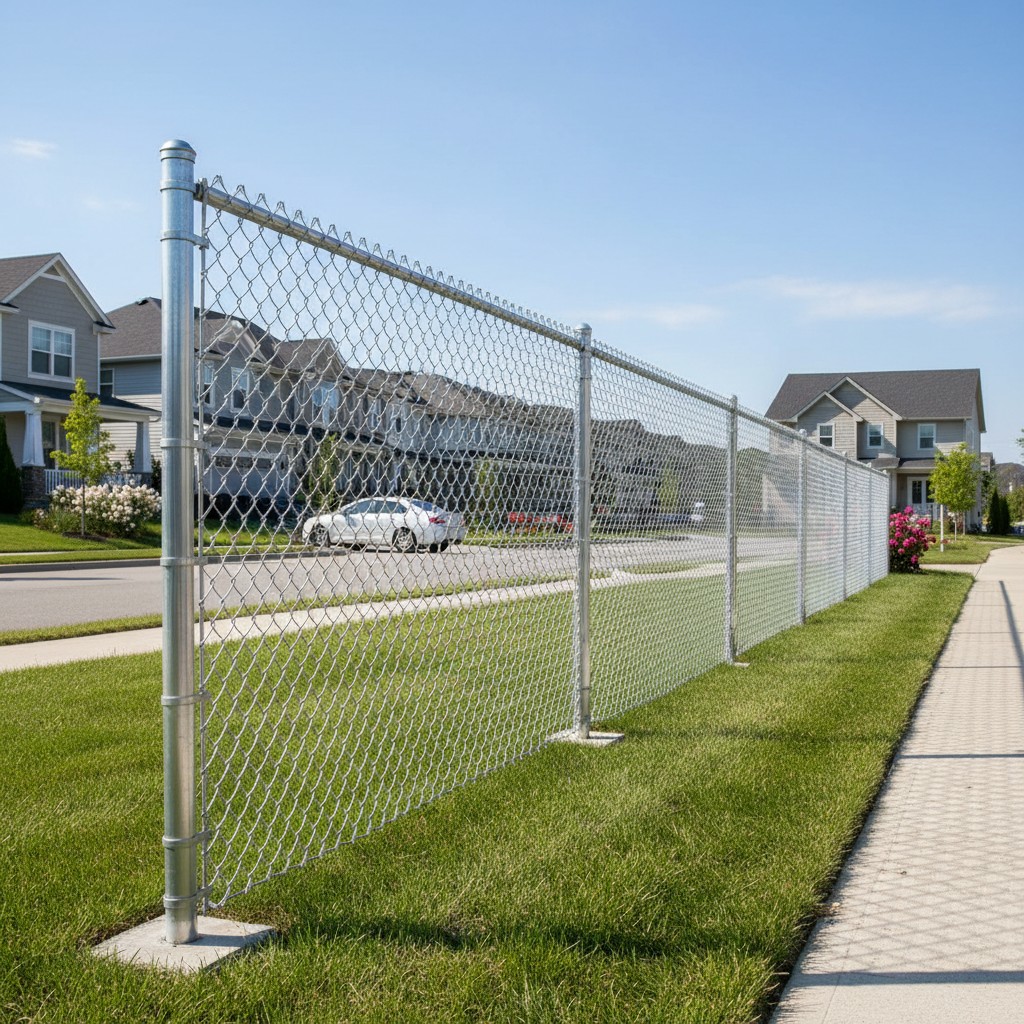
Quick Cost Summary
For a standard residential chain link fence, expect to pay $12 to $30 per linear foot installed, or $5 to $15 per linear foot for materials only. The wide range depends primarily on fence height, wire gauge (thickness), and whether you choose galvanized or vinyl-coated mesh.
Quick math: A typical 150-foot, 4-foot-tall galvanized chain link fence costs approximately $1,800 to $3,000 professionally installed, or $750 to $1,500 for materials if you do it yourself. That makes it roughly one-third to one-half the cost of a comparable wood or vinyl privacy fence.
For an instant estimate based on your exact length and configuration, use our fence calculator.
Cost by Height
Height is the biggest cost driver for chain link. Taller fences require longer posts, wider mesh rolls, and stronger terminal (corner/end) posts. Each foot of added height increases cost by roughly $3 to $5 per linear foot installed.
| Fence Height | Materials per LF | Installed per LF | Common Use |
|---|---|---|---|
| 3 ft | $4 – $10 | $10 – $16 | Garden borders, decorative boundary |
| 4 ft | $5 – $12 | $12 – $20 | Standard residential, backyards, dog containment |
| 5 ft | $7 – $14 | $15 – $25 | Enhanced security, pool perimeters |
| 6 ft | $9 – $17 | $18 – $30 | Maximum residential height, commercial |
| 8 ft | $12 – $22 | $25 – $40 | Commercial, industrial, sports courts |
Most residential chain link fences are 4 feet tall. Many municipalities restrict residential fences in front yards to 3 or 4 feet and side/backyards to 6 feet. Check your local codes before ordering materials — an over-height fence may need to come down.
Galvanized vs Vinyl-Coated
Chain link mesh comes in two finishes, and the choice affects both appearance and longevity.
| Feature | Galvanized | Vinyl-Coated |
|---|---|---|
| Appearance | Silver metallic | Black, green, brown, or white |
| Cost premium | Base price | +20% to +40% |
| Corrosion resistance | Good (15-20 years before visible rust) | Excellent (vinyl layer prevents corrosion) |
| Visibility | Highly visible (reflective silver) | Less visible, especially black against landscaping |
| Lifespan | 20 – 25 years | 25 – 30+ years |
| Best for | Budget projects, utility areas, temp fencing | Visible areas, coastal environments, pool fences |
Black vinyl-coated chain link has become the most popular residential option because it virtually disappears against a backdrop of trees, shrubs, or dark mulch. It costs more but dramatically improves the fence's curb appeal. In coastal or salt-air environments, the vinyl coating also provides critical corrosion protection that galvanizing alone cannot match long-term.
Galvanized is the practical choice when appearance is not a concern — utility areas behind sheds, dog kennels, construction perimeters, or any fence that will be mostly hidden. The silver finish is also the standard for commercial and industrial applications.
Gate Costs
Chain link gates are straightforward steel frames covered with mesh. They are less expensive than wood or vinyl gates because the materials cost less and the fabrication is simpler.
| Gate Type | Width | Materials Only | Installed |
|---|---|---|---|
| Walk gate | 3 – 4 ft | $75 – $200 | $150 – $350 |
| Double drive gate | 10 – 12 ft | $200 – $500 | $400 – $800 |
| Rolling/cantilever gate | 12 – 20 ft | $500 – $1,500 | $1,000 – $3,000 |
Walk gates are simple and inexpensive — a basic 4-foot galvanized walk gate with hardware can be found for under $100 at most home improvement stores. Double drive gates for vehicle access cost more because they require a center drop rod, larger hinges, and heavier terminal posts to handle the wider opening. Rolling or cantilever gates are the premium option for commercial entrances where a standard swing gate would block traffic or require too much clearance space.
Each gate requires two terminal posts (also called gate posts) with concrete footings, which adds $30 to $60 in material cost beyond the gate itself. Factor this in when comparing quotes.
Privacy Slats Cost
The biggest drawback of chain link is that it provides zero privacy. If you want the affordability of chain link but need some visual screening, privacy slats or fabric are a cost-effective add-on.
| Privacy Option | Cost per LF | Privacy Level | Lifespan |
|---|---|---|---|
| Aluminum slats (bottom-lock) | $4 – $8 | ~85% blockage | 15 – 20 years |
| PVC slats (top-lock or diagonal weave) | $3 – $6 | ~75-90% blockage | 8 – 15 years |
| Hedge slats (artificial foliage) | $5 – $10 | ~90% blockage | 5 – 10 years |
| Privacy fabric/screen | $1 – $3 | ~70-90% blockage | 3 – 7 years |
Aluminum bottom-lock slats are the most durable option. They are woven into the mesh from the bottom and lock in place, so they do not blow out in wind. PVC slats are lighter and cheaper but become brittle after years of UV exposure. Privacy fabric is the cheapest option and installs with zip ties, but it adds significant wind load to the fence, which can pull posts out of alignment if they were not set deeply enough.
Keep in mind that even with slats, chain link does not provide the same level of privacy or appearance as a solid wood or vinyl privacy fence. If privacy is your primary goal and budget allows, a dedicated privacy fence will deliver a better result.
DIY Chain Link Installation
Chain link is one of the more DIY-friendly fence types. The materials are widely available in kit form from home improvement stores, the mesh is forgiving (it stretches to accommodate minor post spacing errors), and the hardware is standard. That said, it is not beginner-level work — the mesh stretching process requires a come-along or fence puller, and terminal posts must be set precisely for the tension bars to engage correctly.
DIY Savings Breakdown (150 LF, 4 ft tall)
| Materials | $750 – $1,200 |
| Tool rental (auger + fence stretcher) | $75 – $150 |
| DIY total | $825 – $1,350 |
| Professional installed | $1,800 – $3,000 |
| You save | $975 – $1,650 (40-55%) |
Always call 811 at least 48 hours before digging to mark underground utilities — it's free and required by law.
Expect the project to take one to two weekends for a 100- to 200-foot run with one or two gates. The most time-consuming part is digging and setting the posts — the mesh itself goes up in a few hours once the posts are in and the concrete has cured. If you are new to fence building, watch manufacturer installation videos before you start. The mesh stretching step in particular has a specific technique that is much easier to learn visually.
For a broader look at the DIY decision, see our DIY vs. professional fence installation guide, which covers when doing it yourself makes sense and when it is worth paying a contractor.
Related Topics
- Fence Material & Cost Calculator — Instant estimates for chain link, wood, vinyl, and composite fences.
- Privacy Fence Cost: Complete 2026 Pricing Guide — Compare chain link costs to wood, vinyl, and composite privacy fences.
- Wood vs Vinyl Fence Comparison — If chain link does not provide enough privacy, compare your solid fence options.
- DIY vs Professional Fence Installation — When to DIY and when to hire a contractor for any fence type.