Composite Fence Guide — Cost, Brands & Installation
Composite fencing has moved from niche decking spinoff to mainstream fencing option. Here is everything you need to know before buying — real costs, the best brands, installation quirks, and an honest comparison to wood and vinyl.
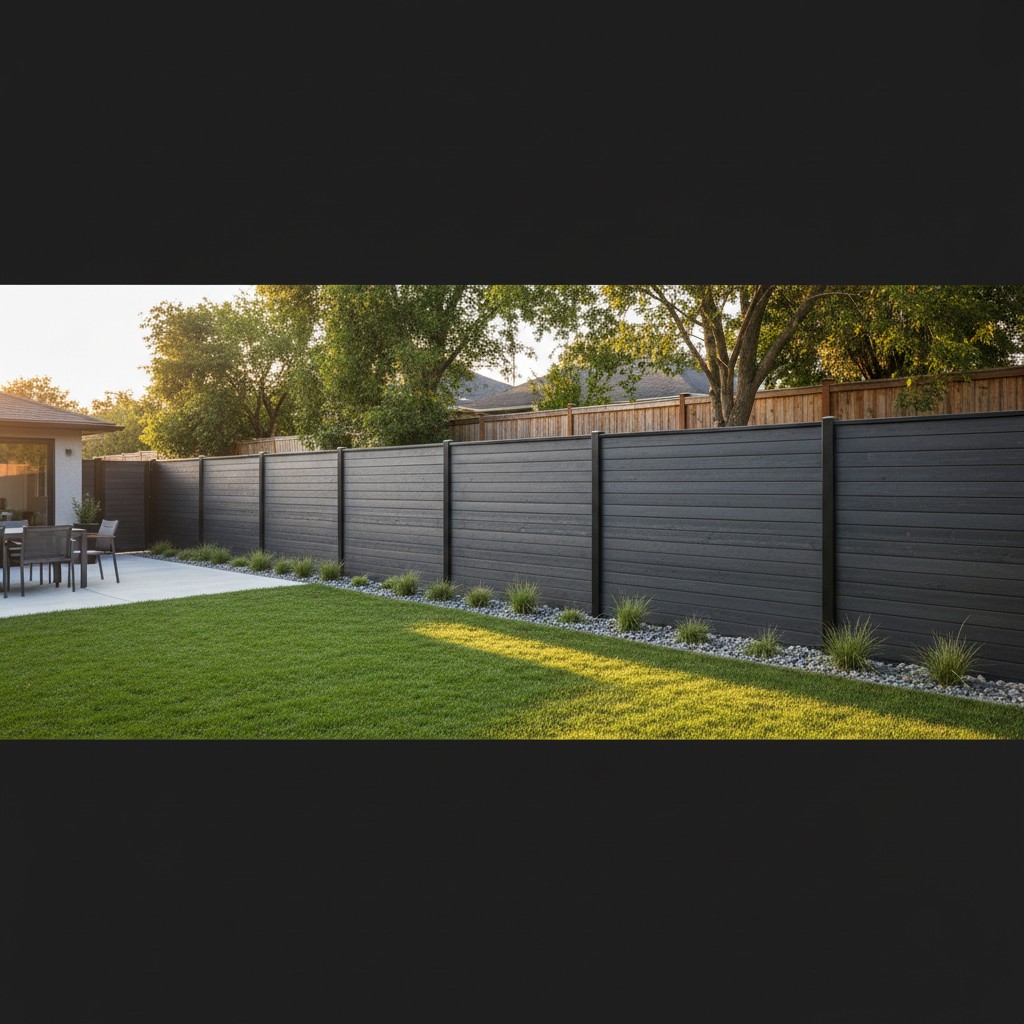
What Is Composite Fencing?
Composite fencing is manufactured from a blend of wood fibers (or wood flour) and plastic polymers — typically polyethylene (PE) or polypropylene (PP). The wood component gives the material a natural grain texture and some rigidity, while the plastic makes it resistant to moisture, rot, and insect damage. Most composite fence boards are extruded through a die, creating a consistent cross-section that can be solid or hollow.
The idea is straightforward: get the appearance of real wood without the ongoing maintenance. Unlike vinyl, which looks obviously synthetic, modern composite panels can be hard to distinguish from stained cedar or redwood at a glance. Some manufacturers add a co-extruded polymer cap on all four sides of each board, which further protects against UV fading, staining, and scratching.
The composite fence market has grown rapidly since the mid-2010s, driven by the same brands that popularized composite decking. Trex, SimTek, and Fiberon are the most widely available. Each takes a slightly different approach — Trex uses aluminum-reinforced posts, SimTek molds full panels from polyethylene with EPS foam cores, and Fiberon offers traditional board-and-rail systems similar to their decking line.
Cost Per Linear Foot
Composite fencing sits at the premium end of the fencing market, comparable to high-end cedar or mid-range vinyl. Here are realistic 2026 price ranges:
| Cost Component | Price Range |
|---|---|
| Materials only (per linear foot) | $30 – $50 |
| Installed (per linear foot) | $45 – $70 |
| 100 ft fence — materials | $3,000 – $5,000 |
| 100 ft fence — installed | $4,500 – $7,000 |
| 200 ft fence — installed | $9,000 – $14,000 |
The wide range reflects brand differences, fence height (6 ft vs 8 ft), and regional labor costs. SimTek's molded panels tend to fall at the lower end since they install faster, while Trex Seclusions with aluminum-reinforced posts land at the higher end. Labor typically runs $15–$25 per linear foot, which is higher than wood fence labor because composite is heavier and some systems require specialized hardware.
Use our fence calculator to estimate materials and costs for your specific project dimensions.
Composite vs Wood vs Vinyl
Each material has genuine strengths. The right choice depends on your budget, how long you plan to stay in the home, and how much maintenance you are willing to do.
| Factor | Composite | Wood (Cedar) | Vinyl |
|---|---|---|---|
| Cost (installed/LF) | $45 – $70 | $25 – $50 | $25 – $45 |
| Lifespan | 25 – 30 years | 15 – 20 years | 20 – 30 years |
| Maintenance | Occasional wash | Stain/seal every 2–3 years | Occasional wash |
| Appearance | Realistic wood grain | Natural wood | Smooth plastic |
| Wind resistance | Good (heavy) | Moderate | Fair (flexible) |
| Color options | 4 – 8 colors | Unlimited (stain) | Limited (white, tan, gray) |
| DIY difficulty | Moderate–Hard | Moderate | Moderate |
| Rot/insect proof | Yes | Resistant (not proof) | Yes |
For a deeper dive on the wood vs vinyl debate, see our wood vs vinyl fence comparison. If vinyl interests you, we also cover vinyl fence pros and cons in detail.
Top Composite Fence Brands
Trex Seclusions
Trex is the biggest name in composite decking, and their Seclusions fence system is the most widely recognized composite fence product. It uses 6-foot horizontal boards slotted into aluminum-reinforced composite posts, creating a clean, modern look. The system is engineered to withstand 130 mph winds in standard configurations. Colors include Woodland Brown, Winchester Grey, and Saddle. The aluminum post core is both a strength (structural integrity, no warping) and a limitation (requires specific brackets and cannot be easily cut in the field). Expect to pay $35–$50 per linear foot for materials.
SimTek
SimTek takes a fundamentally different approach. Instead of individual boards, they mold entire fence panels from polyethylene with an EPS (expanded polystyrene) foam core. The result is a one-piece panel that looks like stacked stone or wood but weighs considerably less than it appears. SimTek panels are popular for perimeter fencing where a solid, uniform appearance matters. They slot into steel-reinforced posts. The molded design means no individual boards can come loose, but you also cannot adjust panel width — you work in fixed increments (typically 6 ft or 8 ft wide). Materials run $28–$40 per linear foot.
Fiberon Horizon
Fiberon's Horizon fence line uses a board-and-rail system similar to traditional wood fencing but with composite materials. Boards feature Fiberon's PermaTech cap layer on all sides for UV and stain resistance. The system is more flexible than Trex or SimTek — you can install boards vertically or horizontally and trim them with a standard miter saw. This makes Fiberon a better choice for irregular lot lines. Available in Ipe, Castle Gray, and Tudor Brown. Materials cost $32–$45 per linear foot.
Installation Considerations
Composite fencing is not a simple swap for wood. The material is significantly heavier — a single 6-foot composite board can weigh 8–14 pounds compared to 4–5 pounds for a cedar board of similar dimensions. This changes the installation process in several ways:
- Posts must be stronger. Most composite fence systems require metal-reinforced posts or steel post inserts. Standard 4x4 wood posts are not adequate for the weight. Trex uses aluminum-core posts; SimTek and Fiberon use steel-reinforced composite posts. Budget for these — they cost $40–$80 per post compared to $8–$15 for a pressure-treated 4x4.
- Post holes need more concrete. The additional weight means posts need a solid foundation. Plan for 3 bags of concrete per post minimum. See our concrete per post guide for detailed calculations.
- Limited field modification. Trex Seclusions boards cannot be easily trimmed — you work with fixed panel widths. SimTek panels are one-piece molded and cannot be cut at all. Fiberon boards can be cut with a miter saw but produce more dust than wood. Plan your layout carefully to minimize cuts.
- Two-person job. The weight of panels and posts makes solo installation impractical. Budget for a helper or factor in professional installation costs.
- Thermal expansion. Composite expands and contracts more than wood. Follow manufacturer spacing guidelines (typically 1/8" to 3/16" gaps) to prevent buckling in summer heat.
Maintenance & Lifespan
This is where composite fencing earns its higher upfront cost. A well-made composite fence requires almost no maintenance beyond occasional cleaning:
- No staining or sealing ever. The color is integral to the material (or applied as a co-extruded cap). There is nothing to recoat.
- Annual cleaning. A garden hose and soft brush handle most dirt. For mold or mildew in humid climates, use a composite deck cleaner once a year. Pressure washers work but keep them under 1,500 PSI to avoid surface damage.
- No rot, no termites. The plastic component makes composite immune to the two biggest wood fence killers.
- Fade resistance. First-generation composites had significant fading issues. Current products with co-extruded caps show minimal color change over 10+ years, though dark colors still fade slightly more than light ones.
- 25–30 year lifespan. Most manufacturers offer 25-year limited warranties on structural integrity and fade resistance. Real-world lifespan depends on climate — UV-heavy desert environments are harder on composite than temperate regions.
Lifetime cost math: A 200-foot cedar fence costs roughly $8,000 installed but needs $300–$500 in stain every 2–3 years and will likely need full replacement at year 18–20. Total 30-year cost: ~$20,000+. A composite fence costs $12,000 installed and $0 in maintenance over the same period. Over 25+ years, composite often wins on total cost of ownership.
Related Topics
- Fence Material & Cost Calculator — Get an instant estimate for your composite fence project
- Wood vs Vinyl Fence Comparison — Side-by-side cost, durability, and appearance comparison
- Privacy Fence Cost Guide — Complete pricing breakdown for all privacy fence materials
- Vinyl Fence Pros and Cons — Full analysis of vinyl fencing advantages and drawbacks