DIY vs Pro Fence Installation — Cost & Time Comparison
Labor is the single biggest cost in any fence project — often 40–60% of the total bill. That makes DIY fencing one of the highest-return home improvement projects you can do. But it is not right for everyone. Here is an honest breakdown to help you decide.
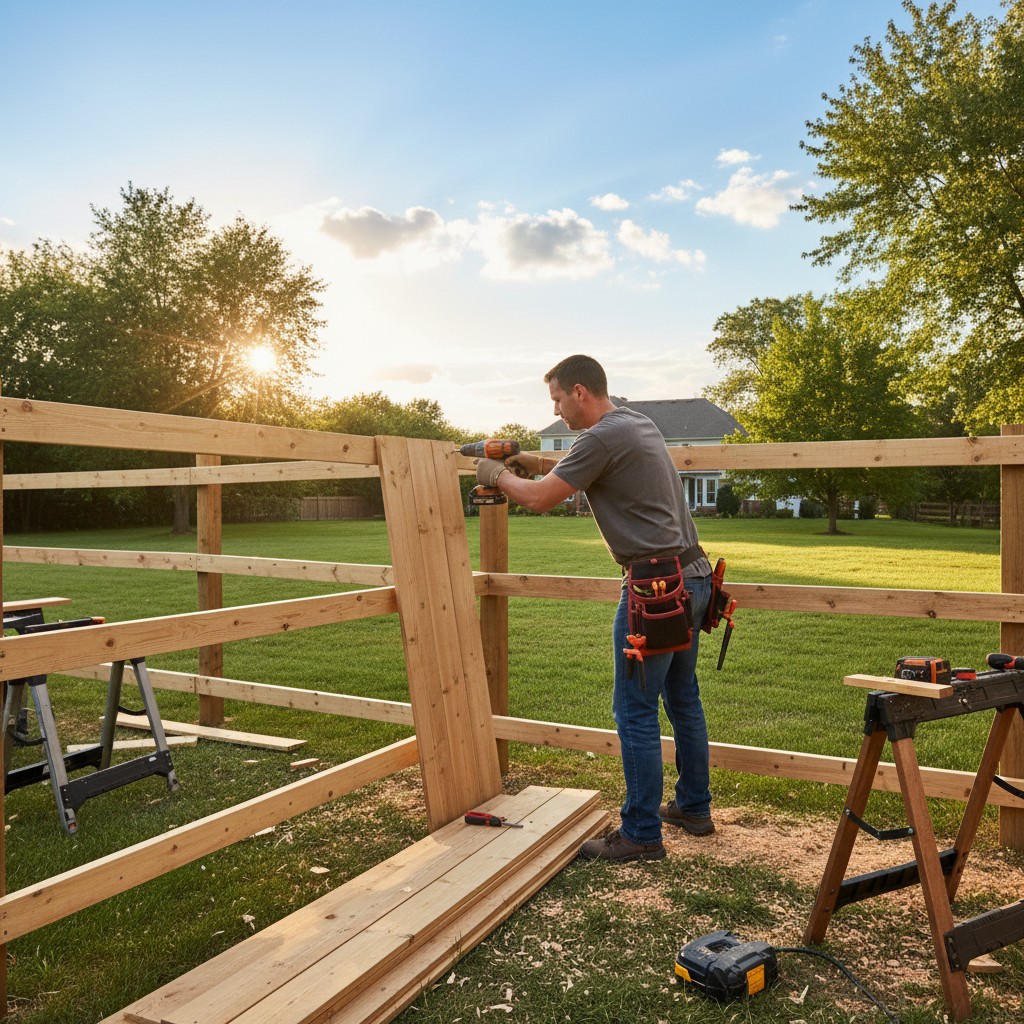
Cost Comparison
The cost difference between DIY and professional installation is substantial. Here are realistic 2026 numbers for a 150-linear-foot fence project:
| Fence Type (150 LF) | Materials Only | Pro Installed | DIY Savings |
|---|---|---|---|
| Wood privacy (cedar) | $2,500 – $3,500 | $5,500 – $8,000 | $3,000 – $4,500 |
| Wood privacy (pressure-treated) | $1,500 – $2,500 | $3,500 – $5,500 | $2,000 – $3,000 |
| Vinyl privacy | $3,000 – $4,500 | $5,000 – $7,500 | $2,000 – $3,000 |
| Chain link (4 ft) | $1,200 – $1,800 | $2,400 – $3,600 | $1,200 – $1,800 |
| Aluminum ornamental | $3,000 – $5,000 | $5,500 – $8,500 | $2,500 – $3,500 |
| Composite | $4,500 – $7,500 | $7,000 – $10,500 | $2,500 – $3,000 |
These numbers include all materials (posts, rails, boards/panels, concrete, hardware, fasteners) and a 10% waste factor. Professional pricing includes labor, equipment, and disposal. Use our fence calculator to get a materials estimate tailored to your exact project dimensions.
Note that the savings percentage is highest for wood fences and lowest for composite. This is because composite and vinyl materials are a larger share of total cost — the labor component is proportionally smaller. For a detailed cost breakdown on the most popular option, see our privacy fence cost guide.
Time Investment
Time is the tradeoff. What a professional crew finishes in 1–3 days will take a DIYer 2–3 weekends for a typical 100–150 foot fence. Here is where the time goes:
| Task | DIY (100 LF) | Professional |
|---|---|---|
| Layout & string lines | 2 – 3 hours | 30 – 60 min |
| Digging post holes (manual) | 6 – 10 hours | N/A (use auger) |
| Digging post holes (power auger) | 2 – 4 hours | 1 – 2 hours |
| Setting posts + concrete | 4 – 6 hours | 2 – 3 hours |
| Rails & boards/panels | 8 – 14 hours | 3 – 5 hours |
| Gates | 2 – 4 hours each | 1 – 2 hours each |
| Total (100 LF, power auger) | 18 – 30 hours | 8 – 12 hours |
The single biggest time saver is renting a power auger ($50–$75/day). It turns a full day of brutal manual digging into a couple of hours. If you only rent one tool, make it the auger.
Reality check: These are working hours for someone with basic tool experience. Add time for materials pickup, lunch, re-checking measurements, fixing mistakes, and the inevitable hardware store run for the thing you forgot. A realistic first-time DIYer should plan for 3 full weekends on a 150-foot fence.
Tools Needed for DIY
You likely own some of these already. Here is the full list broken into must-haves and nice-to-haves:
Essential tools
- Post hole digger — Manual clamshell style ($30–$50) or power auger (rent: $50–$75/day)
- 4-foot level — For checking post plumb. A torpedo level is not long enough. ($15–$30)
- Circular saw or miter saw — For cutting rails, boards, and posts to length. A miter saw makes cleaner, faster cuts but is not portable. ($60–$150 to buy, $30/day to rent)
- Drill/driver — Cordless 18V or 20V with Phillips and square drive bits. You will drive hundreds of screws. ($60–$120)
- String line and stakes — For laying out the fence line and keeping it straight. ($5–$10)
- Tape measure — 25-foot minimum. ($10)
- Safety glasses and ear protection — Non-negotiable when cutting lumber. ($10–$20)
- Work gloves — Pressure-treated lumber is rough on hands. ($10–$15)
Nice-to-have tools
- Laser level — Makes leveling rails across multiple bays much faster than a string line ($30–$80)
- Reciprocating saw — For cutting posts to height after they are set in concrete ($40–$80)
- Speed square — For marking quick, accurate 90-degree cuts on boards ($8)
- Tamping bar — For compacting soil and gravel in post holes ($25)
Buy vs rent: If you already own a drill and circular saw, your rental costs should be under $100 (just the auger). If you need to buy everything from scratch, budget $300–$500 for tools — still far less than the labor savings on a 150-foot fence.
Skill Level by Fence Type
Not all fences are equally DIY-friendly. Here is an honest assessment:
| Fence Type | DIY Difficulty | Notes |
|---|---|---|
| Wood privacy | Moderate | Most forgiving — boards hide small mistakes |
| Wood picket | Moderate | Spacing consistency matters more than privacy |
| Vinyl | Moderate-Easy | Panel system — less cutting, but must be perfectly plumb |
| Aluminum ornamental | Easy-Moderate | Pre-assembled panels, lightweight. Bracket attachment is straightforward. |
| Chain link | Hard | Tensioning fabric, bending top rail, stretching — specialized skills |
| Composite | Hard | Heavy panels, proprietary hardware, limited field cutting |
| Wrought iron | Not recommended | Requires welding, specialized tools, professional only |
Surprised that chain link is rated "hard"? Most people are. The mesh tensioning process requires a come-along tool and specific technique — loose chain link looks terrible and sags. Wood privacy fencing is the most popular DIY choice for good reason: it is forgiving, uses common tools, and mistakes are easily hidden behind solid boards.
When to DIY
DIY is the right call when most of these conditions are true:
Safety first: Call 811 before digging (free, required by law). Wear a dust mask when cutting pressure-treated lumber — the sawdust contains copper preservatives. Always check local fence codes and regulations before you start building.
- Straight runs on flat ground — No slopes, no curves, no awkward angles. Straight fences on flat lots are dramatically easier than any other configuration.
- Standard height (6 ft or less) — Taller fences require deeper posts, more concrete, and heavier materials that are harder to handle solo.
- Wood material — The most DIY-friendly fencing material by far. See our how to build a privacy fence guide for the complete walkthrough.
- Basic tool comfort — You have used a circular saw, a drill, and a level before. You do not need to be a carpenter, but you should not be using a saw for the first time on this project.
- Flexible timeline — You are OK spreading the project over multiple weekends. Weather delays, supply runs, and learning curves are part of DIY.
- Budget is a priority — If the cost difference between DIY and pro is the difference between building the fence or not, DIY is the clear choice.
When to Hire a Pro
Professional installation is worth the money in these situations:
- Sloped or uneven terrain — Stepping or racking a fence on a slope requires experience. Each panel must be individually adjusted, and mistakes compound quickly.
- Rocky or root-filled soil — If you hit rock at 12 inches, a manual post hole digger is useless. Pros have hydraulic augers and rock-cutting attachments.
- Permit and HOA complexity — Some municipalities require engineered drawings, specific setbacks, or inspections. A licensed contractor handles the paperwork and knows the local rules.
- Vinyl or composite materials — These systems have tighter tolerances than wood. A post that is 1/2 inch out of plumb creates visible gaps in vinyl panels. Professional crews have the experience to get it right.
- Tight deadline — Need the fence up before a new dog arrives or before a neighborhood inspection? A crew of 3–4 can finish in 1–2 days what takes a DIYer three weekends.
- Underground utilities — If your utility locates show gas, electric, or fiber lines near the fence path, a professional knows how to work safely around them.
How to Find a Good Fence Contractor
If you decide to hire out, here is how to avoid the bad contractors (and there are many in the fencing industry):
- Get at least 3 written quotes. Not verbal — written, with a line-item breakdown of materials, labor, and total. If a contractor will not put it in writing, walk away.
- Check licensing and insurance. In most states, fence contractors need a general contractor license or a specialty license. Ask for a certificate of insurance (general liability + workers comp). Call the insurance company to verify it is current.
- Ask for recent references. Not references from 5 years ago — ask for jobs completed in the last 6 months. Call them. Ask if the fence is still straight, if the gate works, if there were any issues.
- Verify they call 811. Any legitimate fence contractor calls 811 to mark underground utilities before digging. If they tell you it is not necessary, that is a red flag.
- Clarify cleanup and disposal. A good quote includes removal of all debris, old fence disposal (if applicable), and site cleanup. Some contractors leave a mess — get it in writing.
- Payment structure matters. Never pay more than 30–50% upfront. The balance should be due on completion after you inspect the work. Any contractor demanding full payment before starting is a risk.
To understand what a fair price looks like before you get quotes, check our chain link fence cost guide or privacy fence cost guide depending on your project.
Related Topics
- Fence Material & Cost Calculator — Get materials-only pricing for your DIY project
- Privacy Fence Cost Guide — Full breakdown of materials and labor by fence type
- How to Build a Privacy Fence — Complete step-by-step DIY tutorial
- Chain Link Fence Cost — Material and installation pricing for chain link