Privacy Fence Cost: Complete 2026 Pricing Guide
A privacy fence is one of the most impactful improvements you can make to a residential property. It defines your yard, blocks sight lines from neighbors and streets, reduces noise, and adds real resale value. But pricing varies enormously depending on the material you choose, whether you install it yourself, and dozens of smaller decisions that can quietly inflate the budget. This guide breaks down exactly what a privacy fence costs in 2026, so you can plan accurately before you buy a single board.
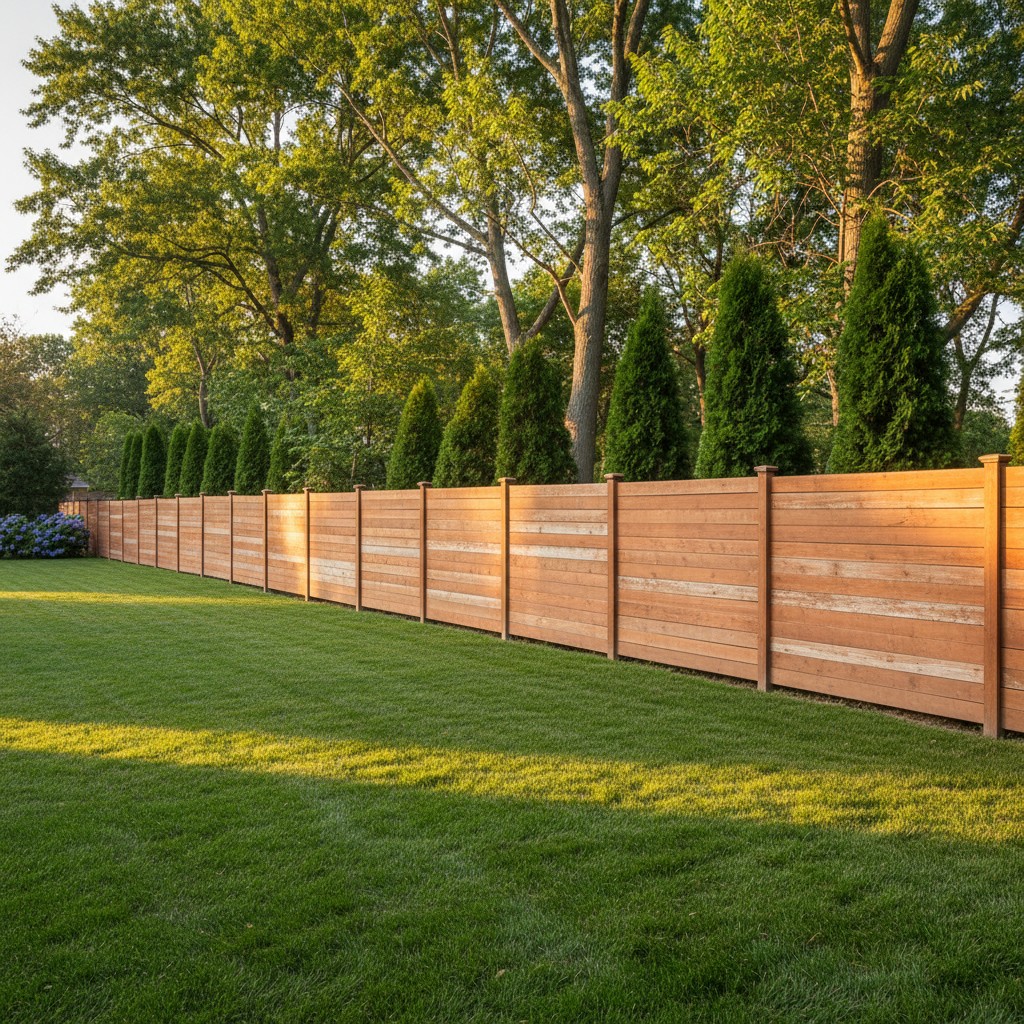
Quick Cost Summary
The table below shows installed cost ranges for a standard 6-foot privacy fence by material type and total fence length. These figures include materials, labor, concrete, and basic hardware. Gate costs are listed separately below.
| Material | 100 LF | 150 LF | 200 LF | 300 LF |
|---|---|---|---|---|
| Pressure-Treated Wood | $2,500 – $5,500 | $3,750 – $8,250 | $5,000 – $11,000 | $7,500 – $16,500 |
| Cedar | $3,500 – $5,500 | $5,250 – $8,250 | $7,000 – $11,000 | $10,500 – $16,500 |
| Vinyl | $2,500 – $4,500 | $3,750 – $6,750 | $5,000 – $9,000 | $7,500 – $13,500 |
| Composite | $3,000 – $5,000 | $4,500 – $7,500 | $6,000 – $10,000 | $9,000 – $15,000 |
Want a personalized estimate? Use the free fence calculator to enter your exact dimensions and get a material-by-material breakdown.
Cost by Material Type
Material is the single biggest factor in your total fence cost. Here is what to expect from the four most common privacy fence materials in 2026.
Pressure-Treated Wood — $25 to $55 per Linear Foot (Installed)
Pressure-treated (PT) pine is the most affordable privacy fence material and the most widely installed across the country. The lumber is infused with chemical preservatives that protect against rot, fungal decay, and termites for 15 to 20 years. A standard 6-foot dog-ear PT fence with 4x4 posts on 8-foot centers costs roughly $25 to $35 per linear foot installed. Higher-end builds with 6x6 posts, board-on-board construction, or decorative caps push the price to $40 to $55 per foot.
The trade-off is maintenance. PT wood needs staining or sealing within the first year and every two to three years after that. Without it, the wood grays, cracks, and warps. If you are comfortable with periodic upkeep, PT gives you the best upfront value. If you want the full cedar vs. pressure-treated comparison, we cover the long-term math separately.
Cedar — $35 to $55 per Linear Foot (Installed)
Western red cedar is the premium wood choice. It contains natural oils that resist rot and insects without chemical treatment, and it weathers to an attractive silver-gray if left unstained. Installed costs run $35 to $55 per linear foot depending on grade (select tight knot vs. #2 common) and fence style. Cedar boards are lighter and easier to work with than PT, making it a favorite for DIY installations.
The downside is price. Cedar typically costs 30 to 50 percent more than pressure-treated pine for materials alone. It also requires periodic sealing if you want to preserve the original warm tone rather than letting it gray.
Vinyl — $35 to $55 per Linear Foot (Installed)
Vinyl (PVC) privacy fencing has become increasingly competitive on price. Materials alone run $25 to $40 per linear foot, with a standard 6-foot white or tan vinyl panel fence installed for $35 to $45 per linear foot. Premium textures that mimic wood grain, or colors like dark walnut and gray, push the installed cost to $50 to $55 per foot. Vinyl requires essentially zero maintenance — no staining, no sealing, no painting. You hose it off once a year and that is the extent of the work.
The material does have limits. It can crack in extreme cold, yellow slightly over decades of UV exposure, and color choices remain narrower than what you get with stainable wood. For a deeper dive, see our wood vs. vinyl fence comparison.
Composite — $30 to $50 per Linear Foot (Installed)
Composite fencing (a blend of wood fibers and plastic polymers) occupies the middle ground between wood's natural look and vinyl's low maintenance. Installed costs range from $30 to $50 per linear foot. High-end composite panels with realistic wood texturing and color-through construction can reach $55 to $60. The material will not rot, warp, or attract insects, and most manufacturers offer 20- to 25-year warranties. For a deeper look at brands, pros/cons, and installation, see our complete composite fence guide.
The main drawback is weight — composite panels are significantly heavier than wood or vinyl, which adds labor cost and makes DIY installation more challenging. Availability can also be limited compared to wood and vinyl at local home improvement stores.
DIY vs Professional Cost
Labor typically accounts for 40 to 60 percent of the total installed price. If you have the tools and the time, DIY installation can cut your total cost nearly in half. Here is how the numbers break down for a 150-linear-foot, 6-foot-tall pressure-treated wood privacy fence.
| Cost Component | DIY | Professional |
|---|---|---|
| Materials | $2,200 – $3,600 | $2,200 – $3,600 |
| Labor | $0 | $2,000 – $4,000 |
| Tool rental (auger, level) | $100 – $250 | Included |
| Total | $2,300 – $3,850 | $4,200 – $7,600 |
A professional crew can typically install 100 to 150 linear feet in a single day. DIY will take most homeowners two to four weekends. If you are considering doing it yourself, start with our DIY vs. professional fence installation guide to see where the real savings are and where cutting corners costs you more in the long run.
Gate Costs
Gates are often the most underbudgeted part of a fence project. Every gate requires two extra posts (gate posts are typically 6x6 rather than 4x4 for added strength), heavy-duty hinges, a latch, and sometimes a drop rod or cane bolt for double gates. Here are typical installed gate costs in 2026.
| Gate Type | Width | Materials Only | Installed |
|---|---|---|---|
| Single walk gate | 3 – 4 ft | $75 – $200 | $200 – $500 |
| Double walk gate | 6 – 8 ft | $150 – $350 | $400 – $800 |
| Drive / RV gate | 10 – 16 ft | $300 – $700 | $700 – $1,500 |
Drive gates wider than 10 feet often require a steel frame for structural rigidity, which adds $200 to $500 to the material cost. If your property slopes, the gate frame may need custom angling — another $100 to $300 in labor.
Hidden Costs
The fence itself is only part of the total expense. Several additional costs catch homeowners off guard. Budget for these from the start so you do not run short halfway through the project.
Permits — $50 to $200
Most municipalities require a fence permit. Costs typically range from $50 to $200 (can be higher in some jurisdictions). Rural areas may charge less, while metro jurisdictions with site plan requirements can cost more. Check your local building department before you dig. Some HOAs have separate approval processes on top of the municipal permit.
Property Survey — $300 to $800
If you are not 100 percent certain where your property line is, get a survey. A fence built even 6 inches over the line onto your neighbor's property can be ordered removed at your expense. Professional surveys typically cost $300 to $800 depending on lot size and complexity. The cost of a survey is trivial compared to the cost of tearing down and rebuilding a misplaced fence.
Old Fence Removal — $3 to $5 per Linear Foot
Removing an existing fence typically costs $3 to $5 per linear foot for wood fences and $2 to $4 per foot for chain link. Concrete post footings that need to be dug out add $15 to $30 per post. Disposal fees at the dump are usually $30 to $80 per load. This is one area where DIY can save real money — demo is labor-intensive but does not require specialized skills.
Grading and Slope Work — $500 to $2,000+
Level ground is the easiest to fence. Sloped terrain requires either stepping the fence sections (leaving triangular gaps at the bottom) or racking the panels to follow the grade. Both approaches add labor time and can require custom-cut boards. Severe slopes may need retaining work before fencing begins.
How to Reduce Fence Costs
There are several legitimate ways to bring your fence budget down without sacrificing quality or longevity.
- Choose pressure-treated over cedar. PT pine costs 30 to 50 percent less than cedar and lasts just as long when properly maintained. If appearance is a concern, you can stain PT wood to look similar to cedar for a fraction of the cost.
- Minimize gate count. Every gate adds $200 to $800 to the project. Plan your layout so one or two gates serve all access needs rather than adding gates "just in case." You can always add a gate later if you find you need one.
- Do your own demo. Removing an old fence is straightforward work that does not require special tools. Renting a dumpster ($300 to $400) and doing the demo yourself can save $500 to $1,000 on a typical project.
- Get three quotes. Fence contractor pricing varies significantly in the same market. Get at least three written quotes that itemize materials and labor separately. This also gives you leverage to negotiate.
- Build in the off-season. Fall and winter (outside of frozen-ground areas) are slower seasons for fence contractors. You can often negotiate 10 to 15 percent lower labor rates between October and February.
- Use the calculator to plan precisely. Over-ordering materials wastes money. Under-ordering means extra delivery charges and project delays. Our fence calculator includes a built-in waste factor so you order the right amount the first time.
Related Topics
- Fence Material & Cost Calculator — Get an instant materials and cost estimate for your project.
- Wood vs Vinyl Fence: Cost, Durability & Maintenance Compared — Side-by-side comparison to help you choose.
- Cedar vs Pressure-Treated Fence — The long-term cost math between the two most popular wood species.
- DIY vs Professional Fence Installation — When to hire a pro and when to save the labor cost.